
Homeschool Printables: A Simple Weekly Routine for Grades 3-5
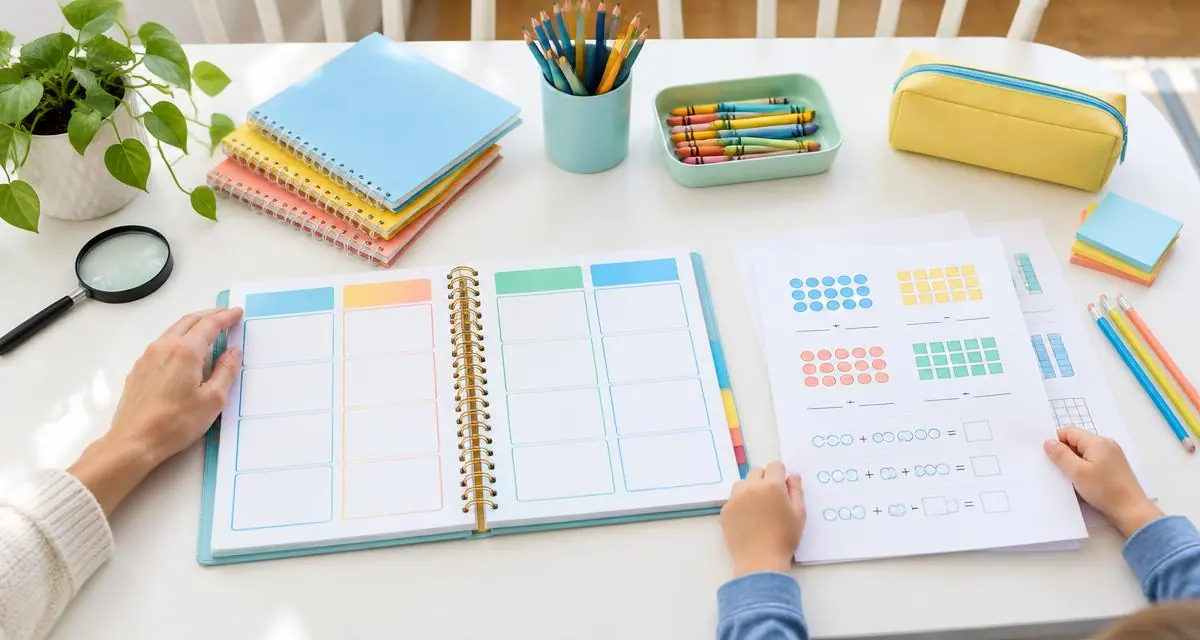
Plan before making copies
Begin with the lessons, books and projects you already plan to use. Decide where a printable might help: a math review page, a science observation record or a short journal prompt. Choosing the purpose first avoids printing a stack simply because it is available. Write down a few priorities for the week and leave room for library visits, appointments, outdoor time and projects that take longer than expected.
Grades 3–5 cover different ages and learning needs, so a sample routine is not a curriculum or a required timetable. Follow the requirements that apply to your homeschool and choose materials that suit your child. A weekly checklist can be helpful, but a notebook or whiteboard may work just as well. The best format is the one you can change without rebuilding your whole plan.
Give each page a clear job
A math page might provide practice after a lesson on multiplication. STEM worksheets for kids might hold predictions, drawings and observations during a supervised activity. A growth mindset journal for kids can offer a reflection prompt without asking for a long written answer. Look at the actual page before using it and decide whether it matches the lesson and your child’s current understanding.
If a topic is new, talk through an example or use objects and drawings before asking for independent work. Worksheets are not automatically easier just because they are printable. Watch how your child approaches the first few questions. If directions are unclear, clarify them together. If the task is already familiar, choose a smaller section or a different activity rather than requiring every item to be completed.
Build a repeatable weekly rhythm
One possible rhythm is to prepare folders at the start of the week, use selected pages on suitable days, and review the folder before planning again. A math activity might fit Monday, a reading conversation Tuesday, and a science observation later in the week. This is simply an example. Move tasks around when family plans change and avoid measuring the week by the size of the completed stack.
Keep pencils, erasers, crayons and blank paper beside the folders. Label materials by child or subject if you share a learning space. Print only what you expect to use and choose black-and-white settings where they preserve the page’s meaning. For US Letter files, check that the printer uses 8.5 by 11-inch paper and that the preview includes the whole page. Save unused copies for an appropriate later activity.
Review and adjust without pressure
Ask which activity felt clear and which topic needs another explanation. Keep a useful example if it helps you plan a later review, but you do not need to save every page. A drawing, conversation or hands-on task can belong in your routine as well. When a day is interrupted, shorten the plan or move one item; a weekly folder is a tool, not an obligation.
DigitalByVB’s five-pack bundle includes math worksheets for grades 3–5, science pages for grades 3–6, a money tracker, a journal and party printables. Check the Etsy listing below before choosing materials. For specific math examples, see the related third-grade article. For school breaks, the summer learning packet article offers a lighter menu approach. Teacher resources printable and homeschool pages can support your existing plans without claiming to replace a complete program.