
3rd Grade Math Worksheets Printable: Practice Ideas That Work
Choose one skill before printing
Third grade brings together multiplication, division, fractions, measurement and word problems. Rather than print a thick mixed packet, start with the topic your child is working on at school or in your homeschool lessons. A page with eight multiplication questions can offer a more manageable starting point than a sheet covering several unfamiliar ideas at once. Look for clear directions, readable numbers and enough room to show the working.
Printable worksheets for kids are practice materials, not a replacement for an explanation. Read one question together and ask your child what it is asking. If the page is too confusing, return to a drawing or a hands-on example. If it feels familiar, offer a few independent problems and compare approaches afterward. There is no requirement to finish every page in one sitting.
Connect multiplication to equal groups
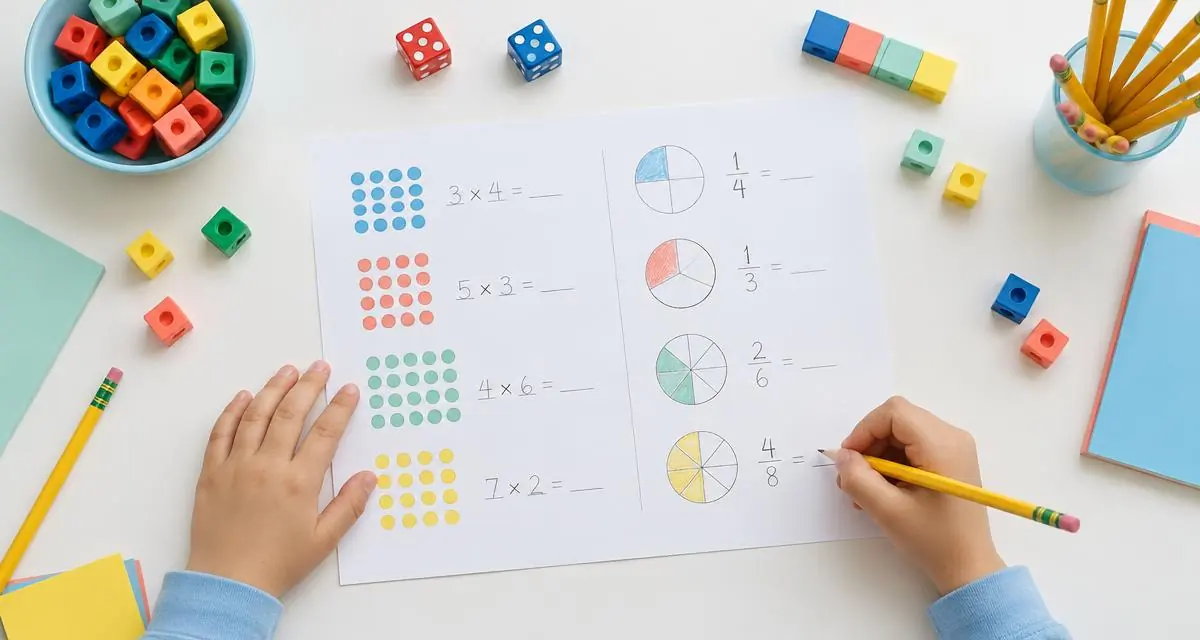
Use small blocks, buttons or drawn dots to make equal groups. Arrange three rows of four objects, count them, and write the matching multiplication sentence. Rotate the array and discuss what changes and what stays the same. This gives you something concrete to refer to when your child moves on to 3rd grade math worksheets printable for home practice.
Division can use the same materials. Share twelve counters between three drawn circles, then record how many are in each group. Keep scrap paper beside the worksheet so drawing remains an option. Ask your child to explain one answer rather than race through a timed page. When an answer needs another look, check the groups together without turning the conversation into a score.
Bring fractions and word problems into daily life
Draw a rectangle and divide it into equal parts. Shade one section, name the fraction, and then try another rectangle with a different number of sections. Check that the sections really are equal before labeling them. Paper strips can also help children compare halves and quarters without needing a special kit. A worksheet offers a place to repeat the idea after you have discussed it.
For word problems, underline the question and circle information that helps answer it. Try asking what the child already knows and what is still missing. A sketch of baskets, toys or measuring cups can make the situation easier to discuss. For measurement practice, estimate a book’s length before using a ruler. Record both numbers and talk about the difference. These activities can sit beside ordinary worksheet practice.
Make a flexible practice folder
Choose two or three short opportunities during the week, leaving space for school assignments, rest and outdoor play. One day might focus on multiplication, another on a word problem, and another on measurement. The schedule is an example, not a required amount of practice. If a session becomes frustrating, put the page aside and return to the idea another time.
Print on US Letter paper, 8.5 by 11 inches, and check the preview so the edges are not clipped. Keep useful pages in a folder with pencils and blank paper. Older siblings working on 4th grade multiplication worksheets can use their own section. DigitalByVB’s five-pack bundle includes math practice for grades 3–5 alongside science, money tracking, a journal and party printables; use the Etsy link below to check the current listing and contents. The related homeschool article offers another way to organize your week.